Where the Boundary Falls: Exclusive Use and Shared Space at UK Waterside Venues
Begin with the meeting, not the view
A waterside venue can make an offsite feel more deliberate. The change of setting, the movement of light on water and the simple fact of being somewhere other than the office all help delegates arrive ready to think. But the water also brings questions of access, public realm and separation. Before an organiser chooses between exclusive use and a shared waterfront setting, the meeting itself should set the brief.
A board strategy day with sensitive commercial content is not the same as a departmental planning session, a client showcase or a half-day workshop for twelve people. The first may need a controlled perimeter and strict confidentiality. The second may benefit from the buzz of a working harbour and the option for delegates to step outside between sessions. The decision is not a judgement on the quality of the venue. It is a question of fit between the event, the setting and the level of control the organiser genuinely needs.
What exclusive use actually covers
Exclusive use is often discussed as though it were a single product. In practice it can mean several different things: sole use of a meeting room, sole use of a floor, exclusive access to a terrace at stated times, or a full venue buyout that includes the quay, pontoon or waterside entrance. Each has a different effect on privacy, cost and operations.
Organisers should ask the venue to define the boundary in writing. Does exclusive use include the approach from the street, the reception area, the lift lobby and the outdoor space? If the venue sits within a wider complex, such as a marina building or a riverside campus, can other visitors pass through? A room may be private while the route to it is not. For meetings where delegates may discuss confidential matters in small groups, the whole journey matters, not only the four walls of the main room.
Privacy and concentration
Exclusive use is most valuable when the meeting depends on uninterrupted concentration. Sensitive negotiations, board discussions, assessment centres and senior team sessions often justify the additional cost because they reduce the risk of overheard conversations and unexpected visitors. Privacy is not only about sound insulation. It is also about sightlines, waiting areas and the confidence of delegates that they can speak freely.
A shared waterfront venue can still provide sufficient privacy if the meeting room is well separated from public areas and the terrace is screened or bookable for private periods. The key is to test the reality rather than rely on the plan. Ask when the terrace is open to the public, whether other events are scheduled on the same day and how the venue manages the transition between public and private use.
Noise, tide and passing trade
The waterfront is rarely silent. Gulls, rigging, footfall, service vehicles and occasional marine activity are part of the character, but they can intrude on a session that needs close attention. Exclusive use does not remove environmental noise, but it can reduce competing event noise from other rooms or terraces. A shared venue may place a wedding, a tasting or a public tour near the meeting space, particularly in peak season.
Organisers should ask for a realistic account of the day, not a generic assurance. What else is happening on the quay? Are there deliveries, refuse collections or maintenance works? Does the venue host public events on the terrace? If the meeting falls on a warm Friday in June, the atmosphere may be an asset for a creative workshop and a distraction for a technical review. The answer depends on the programme.
Arrivals and the public realm
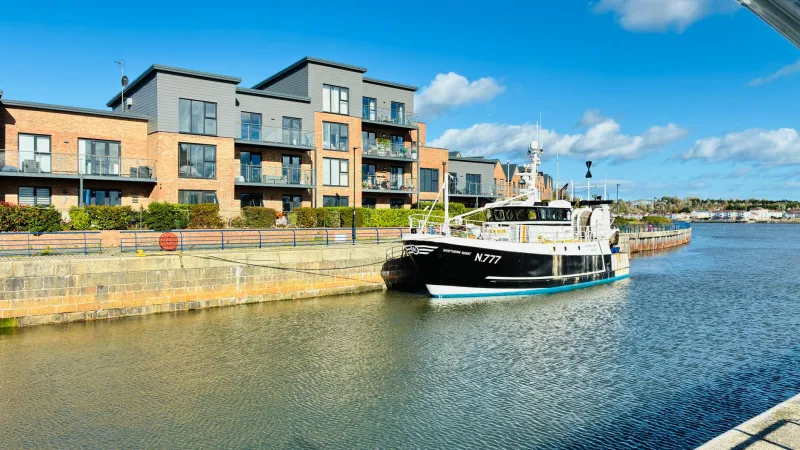
Waterfront venues often have distinctive arrival routes: a walk along a quay, a shared pontoon, a lift from a marina car park or an entrance beside a popular riverside path. These can create a memorable start to the day, but they also affect logistics. Exclusive use may allow the venue to reserve a drop-off area, control signage or provide a private reception point. A shared setting may mean delegates arrive among leisure visitors and members of the public.
For a formal offsite with guest speakers, client attendees or senior stakeholders, a clear arrival sequence is part of the professional impression. The organiser should confirm who will meet delegates, where badges will be issued, how late arrivals are handled and whether private security is required. If the venue cannot offer a dedicated arrival point, the host team must work harder to make the journey feel coherent.
Branding and the sense of occasion
Exclusive use gives an organiser greater freedom over branding. External signage, step-and-repeat boards, welcome desks and product displays can be placed without competing with other users. In a shared venue, branding is usually confined to the hired room and may be subject to restrictions in reception or outdoor areas.
That does not make shared use unsuitable. For internal meetings, a lighter brand presence may be entirely appropriate. The question is whether the event depends on a controlled visual identity. A client-facing product launch by the water may need a stronger signature than a team away day. Organisers should ask what can be displayed, where, for how long and whether fixings are permitted on listed or protected structures. Many waterfront buildings have heritage constraints that affect signage and suspension points.
Catering and service control
Catering is another area where exclusive use can simplify decisions. A full buyout may allow the venue to concentrate service times around the programme, offer greater menu flexibility and manage dietary requirements with less risk of cross-over from other events. Shared use can still work well, particularly where the venue has a dedicated meeting-room service team, but organisers should understand how service will be sequenced.
Ask whether coffee breaks can be served on the terrace, whether alcohol is permitted on the quay and what corkage or external catering rules apply. For a 2026 offsite, cost pressures may encourage organisers to consider external suppliers, but waterside venues often have firm catering arrangements. Confirm minimum spends, service charges and any exclusivity clauses before assuming that a shared setting will be cheaper.
Cost and the value of separation
Exclusive use carries a premium, sometimes a substantial one. That premium can be justified when the meeting requires confidentiality, controlled access, bespoke branding or a precise service rhythm. It is harder to justify when the meeting is small, informal and tolerant of background activity. Organisers should compare the buyout cost with the operational cost of managing a shared setting: additional host staff, clearer signage, separate registration and more careful briefing of delegates.
It is also worth separating the cost of the room from the cost of the waterfront. A shared venue with a excellent room and a well-managed terrace may deliver better value than an exclusive buyout of a less suitable space. The decision should be recorded in the event brief, with the reasons for choosing one model over the other.
A buyout checklist for 2026
Before signing, confirm the following in writing:
- The precise areas included in exclusive use and the times at which control begins and ends.
- Whether the quay, pontoon, terrace, reception and arrival route are included or shared.
- Event activity elsewhere in the venue on the same day and during set-up.
- Noise limits, music policy, permitted hours and any licensing conditions.
- Branding rights, signage positions, fixing methods and removal times.
- Catering arrangements, minimum spend, service charge and external supplier rules.
- Access for deliveries, AV contractors and accessibility requirements.
- Wet-weather alternatives and the procedure if outdoor space cannot be used.
- Security, stewarding and public-access management responsibilities.
- Cancellation, postponement and force majeure terms, including weather-related events.
Questions to put to the venue
A short, direct conversation will reveal more than a glossy brochure. Ask what the venue would recommend for a meeting of your size and sensitivity. Ask for a recent example of a similar booking and what changed on the day. Ask who controls the terrace if another client requests it. Ask how the venue handles delegates who arrive early or need to leave confidential documents securely. Ask what happens if the water itself becomes the story, through high tide, poor weather or an unscheduled marine event.
The best answer is rarely the most exclusive one. It is the arrangement that gives the meeting the right level of privacy, the right atmosphere and a clear line of responsibility. At a UK waterside venue, that boundary should be drawn deliberately, agreed in writing and understood by everyone who will manage the day.