What You'll Hear When the Window Opens: Acoustic Due Diligence for Waterside Rooms
Photo: Jalso Music App, CC BY-SA 4.0, via Wikimedia Commons
The view is the reason most organisers shortlist a waterside room. The sound is the reason a few of them quietly wish they had not. Between gulls on the roofline, wind funnelling along a quay and the rigging of a neighbouring marina, a room that photographs beautifully can make a presenter work twice as hard for half the clarity.
None of this argues against the water. It argues for testing the room properly before you sign, and for planning the day around the things you cannot change.
Why a quayside room behaves differently
Waterfront rooms tend to share three acoustic characteristics. The first is glazing: floor-to-ceiling glass is excellent for light and poor for speech, because sound bounces off it rather than being absorbed. The second is hard finishes — stone, timber, polished concrete, exposed steel — usually chosen to suit the building's industrial or maritime character. The third, and the one most often overlooked, is that the outdoors is effectively part of the room: a terrace, a balcony, a set of doors that will be opened at the first hint of sun.
Add people and the arithmetic shifts again. A room that holds twenty in near-silence holds twenty with a reverberation tail of around a second once it is full, which is enough to blur consonants for anyone at the back or listening in on a video call. That tail is not a defect; it is a characteristic. But it has to be managed.
The five sounds that catch organisers out
- Gulls. Urban herring gulls nest on roofs and ledges between roughly April and July, and they are loud, persistent and entirely indifferent to your keynote. Coastal venues in Cornwall, Pembrokeshire, Northumberland and the Firth of Forth feel this most in late spring.
- Wind. Direction matters more than speed. A steady breeze across an open window is tolerable; the same breeze hitting a microphone with a loose windshield is not. Ask whether the doors will be closed when you present — and whether the venue can guarantee it.
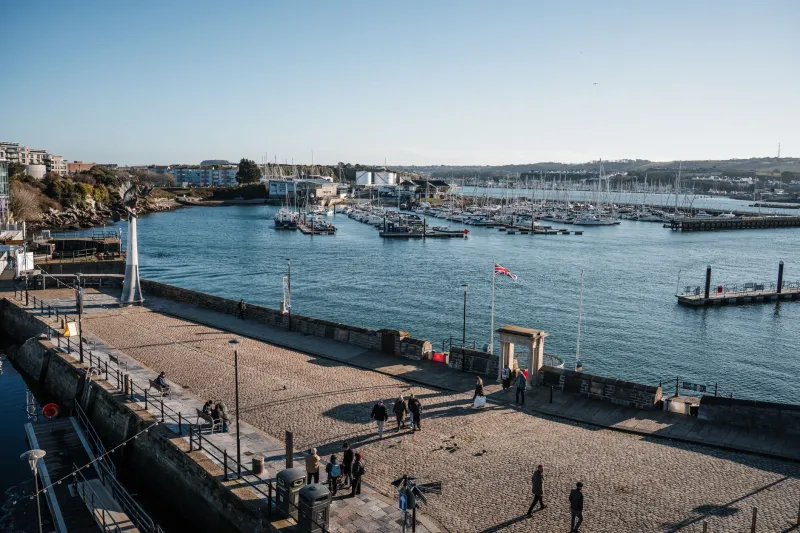
- Rigging and halyards. A marina in a light breeze is a percussion section. Masts clinking against moorings carry further than most people expect, particularly in rooms with single glazing or louvred vents.
- Engines and wash. Outboards, tenders, trip boats, lock gates and the occasional larger vessel. If the venue sits beside a working quay, a ferry terminal or a lock, ask what the traffic pattern looks like across the day.
- People. Decking under heels, gravel underfoot, a reception on the terrace beneath your window, the venue's own lunch service. Outdoor breakout space is a genuine asset, but the sound of it travels.
A twenty-minute test you can run on a viewing
You do not need an acoustic consultant for a booking decision, but you do need to test the room under conditions resembling your session.
- Go at the right hour. View at the time of day you will actually meet. A room that is serene at 9am may sit above a lunch service at 1pm.
- Open what will be open. If the venue intends to have doors or windows open in summer, test with them open. Testing a sealed room is testing a different room.
- Clap once, then speak. Clap in the centre, then have a colleague speak from the far end at normal presenting volume. If you can hear the reflection more clearly than the voice, the room will be hard work.
- Walk the perimeter. Note where glass meets ceiling, where hard walls sit opposite hard walls, and whether the ceiling is absorbent or reflective.
- Join a test call. Dial into a video call from the back corner and speak as a participant would. Ask the person on the other end what they can hear besides you.
- Interrogate the doors. Check seals, check whether the room is a thoroughfare, and check what sits on the other side of each wall — another meeting, a kitchen, a lift lobby, a public corridor.
- Ask about the venue's own calendar. A conference on the floor below, a wedding the night before or a Christmas party the week after all change what you are buying.
Scheduling around the tide and the forecast
Tides are a scheduling tool that most organisers ignore. High water brings boats in and out of locks and berths, which means engine noise and conversation on pontoons. Low water can expose mudflats and bring feeding birds onto the foreshore, which is charming at lunchtime and less so under a plenary. A quick check of the tide table for the relevant harbour will tell you which two-hour window to protect.
Wind direction is worth a look too: an onshore breeze pushes noise and weather towards the building, while an offshore one takes it away. Where the venue has more than one room, put the session that needs the most concentration in the calmest window and the informal work outdoors later.
Asking the venue to meet you halfway
Most good venues will help once the question is framed as practical rather than critical. Ask about portable absorption panels, heavier curtains, a cardioid or lapel microphone rather than a single room mic, and a second smaller room for the noisiest half-hour. Ask whether neighbouring berth holders can be notified, whether signage can discourage the terrace being used directly beneath your window during a presentation, and whether the room can be booked with a thirty-minute buffer before a hybrid session goes live.
The pre-booking acoustic checklist
- Tested at the correct time of day, with doors and windows in their likely state
- Speech intelligible from the furthest seat, not just the front row
- Video call tested from a corner, not the centre
- Door seals, ceiling, floor coverings and wall finishes checked
- Adjoining rooms, terraces, kitchens and public routes identified
- Tide table and forecast consulted for the session window
- Microphone type, absorption options and backup room confirmed in writing
- Option to close the terrace doors during presentations agreed
A waterside room can be acoustically superb — many are, and quietly so. The difference between the good ones and the disappointing ones is rarely the building. It is whether anyone tested it before the booking was made.