Two Kinds of Blue: A Decision Framework for Coastal and Inland Waterside Venues
The choice between a coastal venue and an inland waterway venue is often presented as a matter of taste. In practice, it is a matter of fit. A sea-facing hotel in Cornwall and a canal-side converted warehouse in Birmingham can both provide a memorable backdrop, but they impose different demands on travel, programme design, contingency planning and group dynamics. The useful question is not which setting is more attractive. It is which setting will help the meeting do its job.
Begin with the meeting's purpose
Before comparing quaysides with towpaths, organisers should define the primary objective. A board meeting requiring confidentiality and tight timing may benefit from the contained, predictable environment of an inland waterway venue. A client hospitality event or a milestone celebration may draw greater value from the expansiveness and sense of occasion that a coastal setting provides. A creative sprint may thrive on the stimulation of a harbour or estuary, while a detailed operational review may be better served by the quiet linearity of a canal.
Neither setting is inherently superior. Coastal venues tend to support outward-looking agendas, reward and external stakeholder engagement. Inland waterway venues tend to support focus, privacy and efficient movement. The framework below is intended to make that trade-off explicit rather than leaving it to the view from the window.
Travel, access and the last mile
Access is often the deciding factor in practice. Coastal venues frequently sit at the end of longer rail or road journeys. Popular destinations in Cornwall, Pembrokeshire, Northumberland and the Norfolk coast can involve a final leg by taxi, minibus or ferry, and seasonal traffic can make arrival times unpredictable. Tide tables and ferry schedules may need to be built into the agenda. Parking may be limited, and narrow approach roads can complicate coach access.
Inland waterway venues are often more closely integrated with the transport network. Canal-side locations in Birmingham, Manchester, Leeds and London are frequently within walking distance of mainline stations, and the surrounding infrastructure is usually designed for year-round business use. This does not mean every inland venue is easy to reach: rural locations in the Lake District, the Cotswolds or the Shropshire Union canal network can be as remote as any coastal site. Organisers should assess the last mile with the same rigour in both cases, including arrival windows, luggage transfer and accessibility from the nearest station.
Weather exposure and programme resilience
Coastal settings are more exposed to wind, salt air, sea mist and sudden squalls. Outdoor elements of the programme require a firm contingency and an early go/no-go decision. Delegates should be advised on clothing, and any boat transfer or shoreline activity should have a clearly defined cancellation point. Coastal venues can be spectacular in settled weather, but they demand a more disciplined approach to programme design.
Inland waterway venues are not immune to the weather, but the exposure is generally lower. Canal-side terraces and towpaths can still be affected by rain and river levels, and flooding is a genuine consideration in some locations. However, the reduced wind exposure often allows more spontaneous use of outdoor space, and the indoor-outdoor relationship is usually easier to manage. For meetings that rely on short outdoor breaks rather than a full outdoor programme, inland venues can offer greater flexibility.
Group logistics and space planning
Coastal venues are often converted hotels, harbour buildings or historic forts. Room sizes vary considerably, and exclusive use is common but not universal. Organisers should check ceiling heights, natural light, acoustic separation and accessibility, particularly where cobbles, slopes or historic thresholds are present. Boat transfers are a popular option, but capacity and tide dependence must be verified.
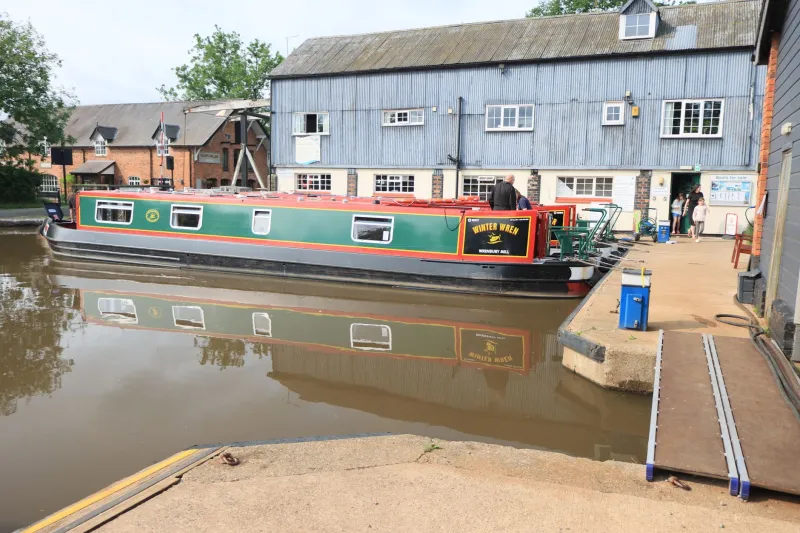
Inland waterway venues frequently occupy converted warehouses, mills and canal-side hotels. Many are flat, accessible and designed around flexible meeting space. Shared buildings are more common, so exclusivity should be confirmed. Narrowboat transfers can be charming but are slow and limited in capacity; they suit small groups rather than full delegate cohorts. The practical lesson is to test the movement plan against the group size and the programme timing, not against the photograph on the venue's website.
Evening options and hospitality
Coastal venues often provide a stronger sense of occasion for evening programmes. Harbour-side restaurants, seafood menus and coastal walks can create a memorable close to the day. The trade-off is seasonality: some coastal businesses reduce their hours or close entirely outside the main season, so organisers should confirm opening times and book well in advance. Winter coastal evenings can be atmospheric, but they require more planning.
Inland waterway venues usually benefit from proximity to city amenities. Canal-side restaurants, theatres and hotels are often available year-round, and the evening programme can be integrated with the daytime agenda without long transfers. The atmosphere is less dramatic, but the convenience is real. If the objective is reward and retreat, the coast may justify the additional planning. If the objective is a seamless day with minimal friction, inland waterways often have the advantage.
The atmosphere each setting creates
The sea is expansive, stimulating and slightly unpredictable. It can encourage big-picture thinking and a sense of departure from the everyday. It can also distract, particularly if the weather turns or if delegates are tempted outdoors when the agenda require focus. Canal and river settings are contained, quiet and linear. They tend to foster conversation and a calmer rhythm, and they can feel less exposed. Neither atmosphere is universally better; the question is which one suits the group and the task.
A simple decision framework
| Criterion | Coastal venue | Inland waterway venue |
|---|---|---|
| Primary objective | Hospitality, celebration, external engagement | Focus, governance, detailed work |
| Travel tolerance | Lower; allow longer arrival windows | Higher; often closer to transport hubs |
| Weather risk | Higher; firm contingency required | Moderate; more flexible outdoor use |
| Evening programme | Strong sense of occasion; seasonal caveats | Convenient; year-round city amenities |
| Group logistics | Verify tides, transfers and accessibility | Verify exclusivity and boat capacity |
| Atmosphere | Expansive and stimulating | Contained and conversational |
Questions to put to either venue
Organisers should ask how the waterside element is actually used, not merely whether it exists. What is the contingency for water-based activity? Are tide times or lock schedules relevant to the programme? Is the waterfront accessible to all delegates? What noise is audible from the meeting room, whether from gulls, boats, locks or nearby events? Is exclusive use available, and what does it cover? What are the winter operating hours and catering arrangements? These questions apply equally to coast and canal, and the answers will usually reveal more than the marketing imagery.
The right choice is the one that supports the meeting's purpose with the least avoidable friction. Coastal venues offer drama and reward; inland waterway venues offer control and convenience. A well-run offsite can succeed in either setting, provided the decision is made deliberately rather than by default.