The Dry Run: Underwriting Water Activities Before Anyone Gets Wet
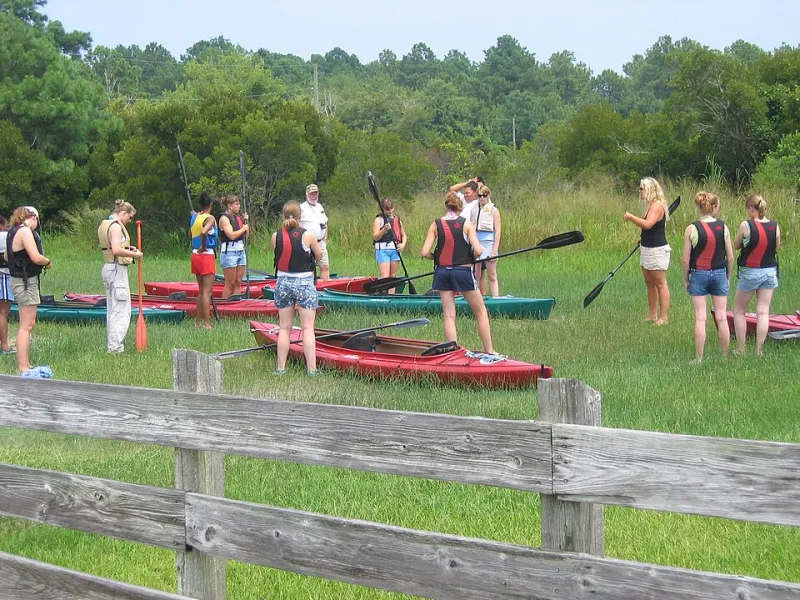
Photo: Virginia State Parks staff, CC BY 2.0, via Wikimedia Commons
A waterside offsite is at its most persuasive when the agenda leaves the building. An hour on the water, whether that is a sheltered paddle on a Welsh reservoir or a RIB passage out of Portsmouth Harbour, gives a team a shared experience no breakout room can manufacture. It also imports a category of risk that most meeting organisers are not trained to assess. The purpose of this piece is not to discourage the idea. It is to make the decision an informed one, and to ensure the paperwork stands up if the day goes wrong.
Vet the operator, not the brochure
The first question is not what the activity looks like but who is delivering it. In the UK, the Adventure Activities Licensing Authority (AALA) regime is mandatory only for certain activities provided to under-eighteens. For an adult-only corporate group, a licence is therefore a useful signal rather than a legal requirement, and its absence is not automatically disqualifying. Look instead for a combination of evidence: RYA recognition for sailing and powerboat work, British Canoeing awards for paddlesport, Adventuremark accreditation, and named, in-date instructor qualifications with the certificate numbers supplied rather than implied.
For motorised craft, including RIB experiences, ask whether the vessel is coded under the Workboat Code and whether the skipper holds a commercially endorsed certificate of competence. An uncoded RIB with a keen amateur at the wheel is not a corporate activity; it is an unauthorised one. Confirm, too, that the guides who will actually be on the water with your group are the ones whose credentials you have seen, rather than a senior instructor who remains shoreside.
Read the insurance schedule, not the certificate
Every provider will send a certificate of public liability cover within the hour. Fewer will send the schedule, which is where the substance sits. Request both, and check the activities named on the policy against the activities you have booked — a policy written for shore-based team building will not respond to a sailing incident. Confirm the limit of indemnity, the excess, and whether the policy excludes anything that matters, such as use beyond a specified area or groups above a stated size.
Ask your own insurer two questions: whether your corporate event policy responds to participant injury arising from a third-party activity, and whether the provider needs to be named as an additional insured. Note also that a signed waiver does not do the work many organisers assume. Under the Consumer Rights Act 2015, a provider cannot exclude liability for death or personal injury caused by negligence, and a document that claims to do so tells you something about the operator's grasp of its own obligations.
Screen participants without turning the day into a medical
A short, well-designed declaration is sufficient for most flat-water and coastal sessions. Ask about swimming confidence, relevant medical conditions, pregnancy, recent surgery, and any mobility or sensory need that affects getting in and out of a craft. Collect it in advance, store it in line with your data protection obligations, and share only what the provider needs to know — normally a summary rather than a stack of forms.
Build in a dignified opt-out. Some colleagues will not want to be on the water, and a programme that treats that as a failing will produce exactly the pressure you are trying to avoid. Offer a shore-based alternative with genuine content: a guided walk, a facilitated session in the room, or a photography brief. The point of the activity is inclusion, not conversion.
Agree the cancellation triggers in writing
Weather decisions taken on the morning, by whoever is closest to the window, are the ones that go wrong. Set the parameters at contracting stage, in numbers, and put them in the booking confirmation. A workable set for most UK coastal and inland venues includes:
- sustained wind above Force 4 for beginner groups, or gusts above a stated threshold;
- any Met Office amber or red warning covering the venue;
- thunderstorm or lightning risk within the session window;
- sea state or swell above the operator's stated operating limit;
- water temperature below a stated figure without appropriate exposure protection;
- fog or visibility below a defined distance.
Tide deserves its own line. At estuaries and harbour mouths, wind against tide produces sea conditions that a forecast alone will not capture, and low-water windows can strand craft on mud. Ask the provider to nominate a slack-water alternative and confirm the decision time — usually 24 hours out, with a final call on the morning. Then agree what happens commercially: credit against a future date, an indoor substitute, or a refund. A cancellation clause that punishes the client for a decision the operator insists upon is not a partnership.
Make the activity part of the agenda, not a detour around it
A water session consumes more of the day than its stated duration suggests. Allow ninety minutes for a sixty-minute activity once briefing, kitting, changing and drying are counted, and check that the venue has showers, secure kit storage and somewhere warm to return to. Schedule it after the substantive work rather than before: cold water and concentration are poor companions, and a session that ends with wet hair and a 4pm strategy discussion pleases nobody.
If the group is large, ask for split cohorts with parallel content rather than a queue on the slipway. Brief the provider on your objectives — a sailing session run as a co-ordination exercise behaves very differently from one run as a pleasure trip — and give them fifteen minutes with the group beforehand so the safety briefing lands as part of the day rather than an interruption to it.
Keep the record that matters
Retain the provider's risk assessment, insurance schedule, instructor qualifications, your participant declarations and the written cancellation triggers. Nominate one person on your side as the point of contact and confirm who reports an incident to whom, and under which regime. Note the nearest emergency department, the venue's defibrillator location, and whether mobile signal is reliable on the water or whether the operator carries VHF.
None of this is onerous. It is a morning's work, undertaken once, and it is the difference between an activity you can defend and one you merely hope will be fine. The water is the easy part; the dry run is what makes it bookable.