The Programme Bends to the Water: Scheduling a UK Waterside Offsite Around Fixed Events
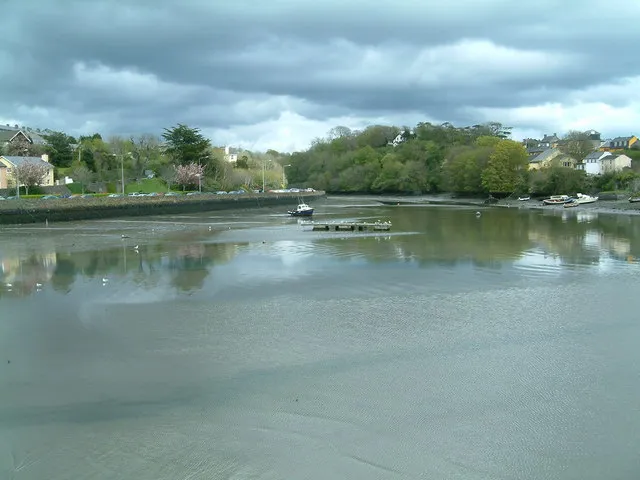
Photo: Oliver Hunter, CC BY-SA 2.0, via Wikimedia Commons
Most offsite agendas begin with a 09:30 welcome and work forwards. At a waterside venue, that assumption can be the first error. The water keeps its own timetable: tide gates open and close, locks fill and empty, bridges lift on fixed cycles, harbour traffic peaks and ebbs, and daylight withdraws at a different hour in Aberdeen than in Plymouth. Treating the waterfront as a static backdrop invites disruption. A more reliable approach is constraint-led programming: identify the immovable events first, then build the day around them.
Begin with the immovable, not the ideal
Before drafting a single session, establish what cannot move. At coastal venues, access to a slipway, pontoon or beach may depend on the tide. Tide times shift by roughly fifty minutes each day, so a route that works at 10:00 on Tuesday may be unusable at the same hour on Wednesday. At inland venues, lock opening hours and bridge schedules can constrain boat transfers. Harbour masters may impose restrictions during regattas, dredging or commercial movements. Daylight is equally non-negotiable: in midwinter, sunset arrives before 16:00 across much of the UK, and earlier still in northern Scotland.
Ask the venue for its fixed events in writing. A useful prompt is: “Which parts of the programme are governed by tide, lock, bridge or daylight, and what are the exact windows?” The answer should be specific enough to place on a timeline, not a general assurance that the water “should be fine”.
Seven questions for the venue before the agenda is drafted
- Which areas of the venue or its grounds are tide-dependent, and what are the access windows?
- What are the operating hours and booking rules for any lock, swing bridge or ferry?
- When does commercial or recreational water traffic peak, and will that affect noise or transfers?
- What are sunrise and sunset times for the date, and is outdoor lighting adequate for late sessions?
- Are there harbour master notices, local events or maintenance closures on the date?
- What is the fallback if a water-based element cannot run?
- Who is the duty contact on the day, and how will schedule changes be communicated?
Build the day in bands
A waterside agenda works best when it is organised into bands rather than fixed clock slots. The morning band is usually suited to high-concentration sessions, when light is stable and the venue is quiet. The midday band should contain the outdoor break, but its timing should be chosen for tide and light rather than habit. The afternoon band is where transfers and outdoor sessions belong, ideally in the best available window. The closing band should finish before light falls if any part of the programme is outside.
Reverse-engineer the day from the least flexible element. If a boat transfer must depart at 14:00 because of a tide window, schedule the preceding workshop to end at 13:00, allow lunch until 13:45, and treat boarding as a agenda item in its own right. Do not place a ninety-minute strategy session across a transfer window and hope it compresses.
Transfers are agenda items, not gaps
A twenty-minute crossing can consume fifty minutes once boarding, safety briefing, weather checks and disembarkation are counted. Build that buffer into the programme. Avoid scheduling a speaker during transit unless the vessel has reliable audio and seating. Consider accessibility, seasickness and the needs of delegates who may prefer to remain ashore. For larger groups, split transfers into waves and give each wave a clear departure time.
Outdoor breaks: light, wind and tide
A terrace break is not automatically restorative. In the UK, a wind off the water can make 12°C feel considerably colder, and low tide may reveal mudflats rather than the view promised in the brochure. Schedule outdoor breaks when the light is favourable and the tide is at a photogenic stage if photography matters. Provide a clear indoor alternative within the same time slot, so the programme does not collapse if the weather turns.
Locks, bridges and peak traffic
Inland waterways bring their own scheduling logic. A boat passing through a flight of locks can take forty-five to sixty minutes or more, and bridge lifts often operate to fixed times. If the venue sits near a lifting bridge, road access may be delayed at peak periods. Harbour venues face similar pressures from ferries, fishing vessels and recreational craft. A quiet outdoor session scheduled at the height of commercial traffic may be neither quiet nor outdoor in practice.
Contingency without chaos
Every waterside agenda should carry one flexible forty-five-minute slot that can absorb a delayed transfer or a closed pontoon. Pair each water-dependent element with an indoor alternative of the same duration, so a swap does not require rewriting the day. Keep the venue’s duty contact and the harbour or lock office number in the chair’s pack. If a tide window closes, move to the alternative immediately rather than waiting for conditions to improve.
A simple template
A workable shape for a winter waterside offsite might run: arrival at 09:00, welcome at 09:30, workshop at 10:00, break at 11:15, second workshop at 11:30, lunch at 12:45, outdoor or transfer element at 13:45, final session at 15:15, close at 16:00. In summer, the outdoor element can move later, but the principle remains: the fixed event determines the sequence, not the other way round.
The waterfront is not a backdrop. It is a participant with its own schedule. Build the agenda around its fixed events, and the water becomes an asset rather than an interruption.