The Well-Packed Delegate: Clothing and Kit Guidance for Waterfront Meetings
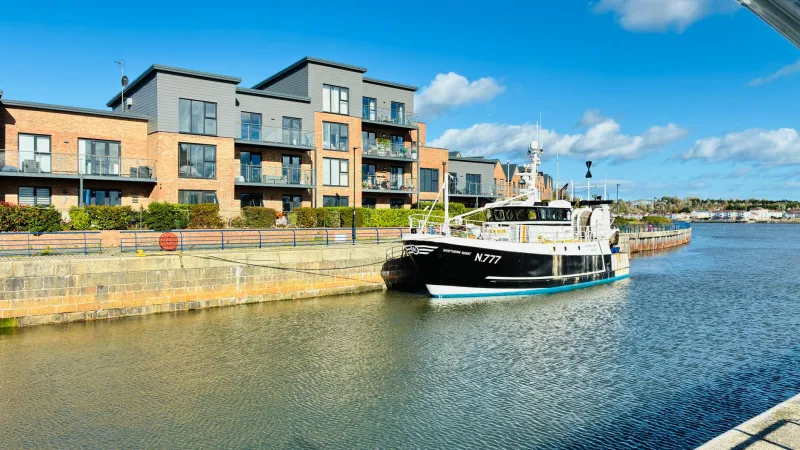
Clothing guidance for a waterside meeting is not a question of etiquette. It is a small piece of event design. A room beside a river, estuary, lake or harbour sits in a different microclimate from the office, and the walk from car park to reception may cross decking, gravel or grass. The aim is not to turn delegates into expedition members, but to remove the predictable distractions that arise when people are too cold, too warm, poorly shod or squinting into reflected light.
Begin with the venue, not the wardrobe
Ask the venue a few practical questions before drafting any guidance. Is the approach path paved, gravelled or unpaved? Are the outside areas timber decking, stone terrace or lawn? Is there a covered walkway between buildings? Does the site sit on an exposed coastal frontage or in a sheltered inland basin? The answers will shape the advice far more usefully than a generic instruction to dress for the weather.
It is also worth checking the forecast in the week before the meeting, but not relying on it exclusively. The Met Office may promise a dry day while the site itself remains damp underfoot until midday. Coastal venues can feel several degrees cooler than the nearest town, and wind on an estuary or harbour wall is rarely reflected in an inland weather app. A short note to the venue about typical conditions in the month of your meeting will usually yield candid, useful detail.
A simple layering formula
For most UK waterside meetings, three layers will serve better than one heavy garment. A base layer should be a normal shirt, blouse or fine knit suitable for the meeting room. A mid-layer might be a lightweight jumper, waistcoat or unstructured jacket that can be removed indoors. The outer layer should be a genuinely weatherproof shell, ideally wind-resistant as well as water-resistant, and long enough to cover the top of the trousers or skirt when walking outside.
This formula allows delegates to move between a heated room, a shaded terrace and a breezy quayside without either shivering or overheating. It also avoids the common problem of bulky coats being draped over chairs in a room where space is already at a premium. Suggest that attendees keep a spare layer in their bag, particularly for early starts and late-afternoon sessions when temperatures fall quickly.
Footwear: grip before polish
Footwear is the item most often overlooked and the one most likely to cause difficulty. Timber decking can be slick after rain, gravel and cobbles can turn an ankle, and grass may conceal soft ground. Closed-toe shoes with a rubber sole and defined tread are the sensible default. Block heels, wedges and flats are preferable to narrow heels, and anyone planning to join an optional waterside walk should be encouraged to bring walking shoes or sturdy trainers.
A spare pair of socks is a modest but welcome addition to the kit list, especially where the route involves a ferry, a beach landing or a walk across wet grass. If the venue has a cloakroom or drying area, mention it. If it does not, say so, so that delegates can plan accordingly rather than discovering the omission on arrival.
Glare, sun and screen visibility
Water reflects light, and a bright day beside a river or sea can be more dazzling than delegates expect. Polarised sunglasses are useful outdoors, as are a hat and sunscreen for longer breaks on a terrace. Indoors, the same sunlight can wash out projection screens or create uncomfortable reflections for anyone facing a window. A brief note suggesting that attendees bring sunglasses and sit with glare in mind is more helpful than a lengthy explanation of solar geometry.
For sessions that involve photography or video calls, advise against hats and heavily tinted lenses indoors. The practical guidance should be clear but not regimented: outdoor cover is welcome, indoor visibility matters.
The line between professional and practical
Waterside venues vary widely in formality. A harbour-side hotel may expect business dress in its principal meeting room, while a converted boathouse or sailing club may have a more relaxed atmosphere. The organiser's task is to set a dress code that respects the setting and the purpose of the meeting without asking delegates to buy specialist clothing.
A useful formula is to specify the professional standard first and the practical addition second. For example, smart casual with a weatherproof outer layer and comfortable, closed-toe shoes. For client-facing sessions, business casual with a jacket and waterproof footwear advised. This preserves a professional appearance while acknowledging that the site itself makes demands on clothing. Avoid over-specifying colour, brand or fabric; the aim is guidance, not uniform.
The kit list in brief
A concise kit list in the joining instructions can cover the essentials without overwhelming anyone. Consider recommending a waterproof outer layer, a spare warm layer, closed-toe shoes with grip, a compact windproof umbrella, a water-resistant bag, charged devices, any personal medication, a refillable water bottle and a notebook or tablet. A small towel or spare socks can be useful where the itinerary includes a boat transfer or a shoreline walk.
Confirm what the venue provides. Some sites offer umbrellas, blankets for outdoor breaks, lockers or drying space; others do not. If the meeting includes an outdoor activity, ask the supplier whether specialist footwear or gloves are required and relay that information separately, so that the core dress code remains simple.
Wording for joining instructions
The tone should be helpful and matter-of-fact. A short paragraph is usually enough:
Please dress for a working day by the water. We recommend smart casual clothing with a waterproof outer layer and comfortable, closed-toe shoes with good grip. The venue has outdoor terraces and gravel paths, and the weather can change quickly. A spare layer and a compact umbrella are useful. If you plan to join the optional waterside walk, walking shoes are advisable. Please contact us with any accessibility or mobility requirements.
That wording gives attendees what they need without sounding parental. It also avoids the trap of issuing a long list of prohibitions. One short paragraph in the confirmation email, repeated in the final reminder, is generally sufficient.
Fewer distractions, better conversation
Good clothing guidance is almost invisible when it works. Delegates arrive prepared, the room stays comfortable, and attention remains on the meeting rather than on wet feet or an unexpected chill. At Waterfront Meeting Rooms, we treat that small piece of preparation as part of the venue brief: not a fussy dress code, but a practical invitation to use the waterfront setting well.